
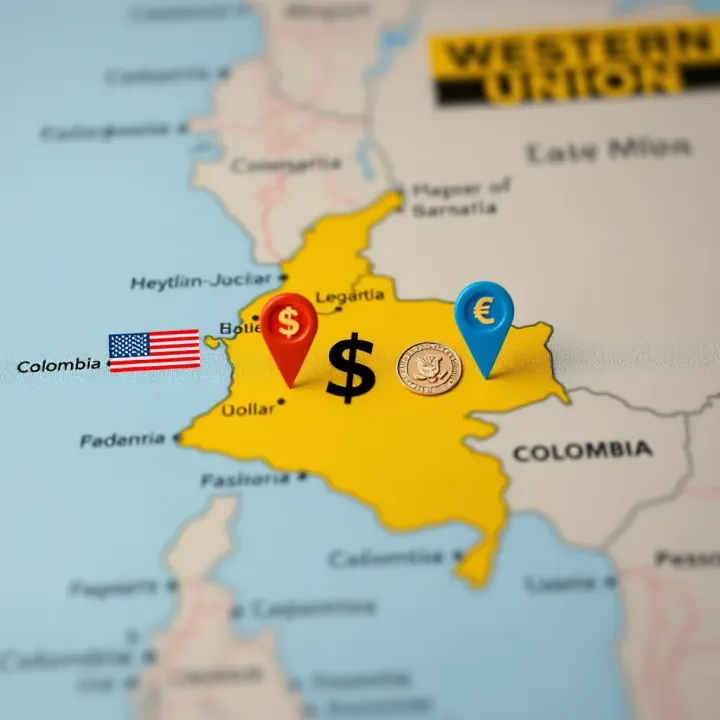
Dollar to Colombian Peso Transfers with Western Union
💸 Learn how to send US dollars to Colombian pesos with Western Union, understand fees, get the best exchange rates, and explore safe alternatives for your transfers.
Editado por
Diego Sánchez
The euro to Colombian peso (EUR/COP) exchange rate represents how many Colombian pesos you can get for one euro. This rate fluctuates daily based on various economic, political, and market factors, making it a key indicator for traders, investors, and anyone dealing with cross-border transactions or travel between Europe and Colombia.

Several factors impact this exchange rate:
Economic performance: Strong GDP growth or higher interest rates in the Eurozone can strengthen the euro, while Colombia’s inflation or fiscal policies affect the peso.
Commodity prices: Colombia is a major oil and coffee exporter. When oil prices rise, the peso often gains value, reflecting Colombia’s stronger export earnings.
Political stability: Political changes or uncertainty in either region can cause spikes or dips in the currency pair.
Central bank actions: The European Central Bank (ECB) and Colombia’s central bank intervene occasionally by adjusting interest rates or through monetary policy, influencing currency movements.
For exporters and importers, small shifts can have big impacts. For example, if the euro strengthens against the peso, Colombian imports from Europe get pricier, possibly affecting local prices.
Travelers benefit from watching the rate too. A favorable exchange rate means more pesos per euro, stretching a travel budget in Colombia. On the flip side, when the peso weakens, European tourists might find trips a bit more expensive.
Several financial news outlets and forex platforms like Bloomberg, Reuters, and XE offer real-time EUR/COP rate updates. Setting alerts or following market trends can help anticipate movement.
Keep in mind: No one can predict exchange rates with absolute certainty. It's wise to consider hedging strategies or consult with a currency expert if you're dealing with large sums.
Here are a few practical tips:
Use forward contracts to lock in rates for future transactions.
Diversify currency exposure if you operate in multiple markets.
Stay informed about economic trends from official reports and reliable financial news.
Understanding the EUR/COP exchange rate boils down to recognizing the economic and political forces shaping it, and knowing how to respond. Whether you're trading, investing, or planning your next trip, staying sharp on this currency pair can give you a real edge.
Understanding the current state of the euro to Colombian peso exchange rate helps traders, investors, and business people make sound decisions. This overview reveals how economic shifts, political events, and market sentiment shape the currency pair’s value. For example, Colombian importers buying European machinery pay more when the euro strengthens, affecting their budget and pricing strategies.
Exchange rates between the euro and the Colombian peso have bounced around quite a bit over the past year. In early 2023, the euro hovered around 4,400 pesos but saw a steady climb to roughly 4,700 pesos by mid-year. This movement isn't just numbers on a screen—travelers planning European vacations or companies budgeting for imports often feel the pinch or the relief directly as exchange rates shift.
Several events have pushed these fluctuations. The European Central Bank’s interest rate changes aimed at curbing inflation tightened the euro's grip globally. Meanwhile, Colombia faced political uncertainties and varying commodity prices, especially oil, which impacts the peso heavily since Colombia is a major oil exporter. Such factors sometimes cause the peso to weaken or strengthen unexpectedly, which can disrupt financial planning.
When you compare the euro’s performance against the Colombian peso to its rivalry with the US dollar, patterns become clearer. The euro to US dollar rate tends to be more stable because of the size and liquidity of both economies. But the euro-peso mirror shows more volatility due to Colombia’s commodity dependence and emerging market status. For instance, a drop in oil prices often weakens the peso faster than it impacts the dollar.
Looking at stability and volatility helps investors choose the right moment to exchange currencies. The euro to peso pair tends to be more volatile compared to the euro-dollar pair, reflecting Colombia’s economic shifts and global commodity fluctuations. Such volatility can present risks but also opportunities if timed well—for example, exporters might gain better profit margins if the euro strengthens against the peso.
Monitoring these trends provides practical advantages for importers, exporters, travelers, and investors who deal directly with these currencies. Understanding recent shifts and comparisons with major pairs prepares you to act decisively rather than react hastily to market swings.
By keeping an eye on this overview, traders and entrepreneurs can respond better to market changes, hedge risks thoughtfully, and spot trends before they become common knowledge.
When trying to understand how the euro trades against the Colombian peso, the economic policies and global events shaping both regions play a key role. From central bank moves in Europe to commodity price shifts impacting Colombia, economic factors drive the exchange rate in practical ways that traders and businesses can’t ignore.

The European Central Bank (ECB) sets the tone for the euro through its monetary policies. When the ECB adjusts interest rates or launches asset purchase programs, it affects how attractive the euro is to global investors. For example, if the ECB raises rates, holding euros becomes more appealing compared to other currencies, often pushing the euro’s value higher against the peso. Traders closely watch ECB announcements because these moves influence capital flows and risk appetite.
Over in Colombia, fiscal measures and inflation trends have a direct impact on the peso's strength. For instance, if the Colombian government increases public spending without backing it up with revenue, it can stoke inflation. High inflation erodes the peso’s purchasing power, prompting investors to shy away, which weakens the peso against the euro. Colombian inflation rates have hovered above the central bank’s targets in recent years, creating uncertainty that reflects in currency swings.
Commodity prices, especially oil and coffee, matter a lot for the Colombian peso because Colombia depends heavily on exports of these goods. A spike in oil prices generally boosts the peso since higher export earnings improve Colombia's trade balance. Conversely, a slump hurts the peso, making the euro relatively stronger. For traders, watching commodity market trends offers clues about potential peso movements.
Political stability and trade agreements also shape the currency scene. For example, a new trade deal between the European Union and Colombia can increase confidence in Colombian markets, strengthening the peso by encouraging foreign investment and trade. On the flip side, political unrest or sudden regulatory changes might push investors toward the euro as a safer bet, affecting exchange rates. Keeping tabs on these developments provides a fuller picture beyond just numbers.
Economic factors intertwine heavily with currency shifts, so staying informed about policy moves, commodity trends, and political climate can help you anticipate euro-peso moves better.
Understanding these dynamics empowers traders, investors, and businesses to make smarter decisions rather than guessing. It’s all about knowing what drives the market beneath the surface.
The exchange rate between the euro and the Colombian peso plays a direct role in how businesses and individuals manage their finances across borders. Understanding its practical impact can help traders, importers, exporters, and travelers make better decisions and minimize risks. This section breaks down how shifts in this currency pair influence trade and travel.
When the euro strengthens against the Colombian peso, importing goods from Europe becomes more expensive for Colombian businesses. Imagine a Colombian distributor who imports French wine priced in euros. If the euro gains value, that same bottle costs more pesos, squeezing profit margins or pushing retail prices higher for consumers. On the flip side, a weaker euro means cheaper imports, potentially lowering costs for Colombian importers and making European products more accessible.
Balancing these fluctuations is especially crucial for businesses with thin margins or those that rely heavily on European raw materials and goods. Strategic planning around currency swings—such as locking in exchange rates ahead of purchases—can help manage expenses better.
A weaker peso relative to the euro can give Colombian exporters an edge in European markets. For example, a Colombian coffee exporter might find their products priced more attractively in euros when the peso falls. European buyers get more value for their money, making Colombian goods more competitive.
Conversely, if the peso strengthens, Colombian exports may become pricier in Europe, potentially decreasing demand. Entrepreneurs and exporters need to monitor exchange rate trends closely to adjust pricing strategies and forecast revenue realistically.
For Colombians planning trips to Europe, the euro-to-peso exchange rate significantly affects travel budgets. A strong euro means tourists will need more pesos to cover the same expenses—from hotels to dining out—making vacations potentially costlier.
On the other hand, when the peso strengthens or the euro weakens, Colombian travelers get more euros for their money, stretching their budgets further during their stay. This exchange rate awareness can influence the timing of trips and how travelers plan their spending.
European tourists visiting Colombia feel the swap rate effects too. A stronger euro against the peso increases Europeans’ spending power, making Colombian hotels, restaurants, and attractions more affordable. This surge typically boosts the local tourism economy.
If the euro weakens, European travelers might tighten their budgets, impacting tourism-related businesses in Colombia. Knowing these shifts helps companies adjust marketing and pricing strategies to tap into changing tourist demand.
Understanding these practical sides of the euro-to-peso exchange rate can give businesses and travelers alike a clear advantage in decision-making and financial planning.
Importers can use hedging techniques to manage costs.
Exporters can time shipments to benefit from favorable rates.
Travelers can schedule trips during periods when their money goes further.
Staying tuned to currency movements is essential, whether for business or leisure.
Monitoring and forecasting movements between the euro and Colombian peso is key for traders, investors, students of finance, and entrepreneurs who deal with these currencies. Keeping an eye on this exchange rate helps you make better decisions—whether you’re hedging risks, setting prices, or planning cross-border transactions. Plus, predictions can alert you when it might be a good day to convert currencies or lock in rates.
Reliable financial platforms like Bloomberg, Reuters, and Investing.com offer up-to-the-minute exchange rate data and charts. Many of these sites provide customization options so you can track the euro to Colombian peso pair specifically. Mobile apps such as XE Currency or OANDA Currency Converter deliver live rates and even alert you when the rate hits your target. These tools are practical for busy professionals who need quick, accurate access on the go.
The benefit is twofold: not only do you get current rates, but you also gain historical data and trend analysis that help you understand how the euro-peso exchange has moved over days, weeks, or months. For example, if you see the rate dipping during a specific time last year, it can clue you into seasonal patterns affecting the peso.
Central banks like the European Central Bank (ECB) and Banco de la República (the Colombian central bank) regularly publish official exchange rates and economic indicators. These sources carry authority and often show the rates used for large financial operations or official transactions.
Using this data grounds your knowledge in fundamentals rather than just market hype. For instance, when the ECB releases monetary policy statements, it can impact the euro’s strength, while Banco de la República’s inflation reports directly affect the peso’s value. Accessing these government resources helps you cross-check market data for accuracy and understand the drivers behind movement.
Economic data like inflation rates, GDP growth, and unemployment figures offer clues about currency strength. A rising eurozone GDP or falling unemployment suggests a stronger euro ahead. On the flip side, if Colombia’s inflation climbs faster than usual, the peso might weaken due to reduced purchasing power.
Monitoring these indicators in real time can prepare you for shifts. Say the Colombian government pegs the peso amid high inflation; knowing this could help you anticipate slower peso depreciation or even temporary stabilization.
Beyond numbers, watching trends like currency trading volumes and shifts in investor sentiment matters. Sudden spikes in forex market activity—for example, following political elections or trade deal announcements—often signal impending rate swings.
Also, technical analysis tools like moving averages or support/resistance levels help spot trends early. If the euro looks set to break past a resistance level against the peso, it may indicate further gains ahead. Paying attention to these market signals complements economic data analysis and sharpens your prediction skills.
The bottom line is that combining reliable tools, official data, and sound analysis gives you an edge in forecasting euro to Colombian peso movements, helping you make smarter financial moves.
Managing currency risk between the euro and Colombian peso is essential for businesses involved in import-export activities and for travelers spending across these currencies. Fluctuations can lead to unexpected costs or lost revenue. Implementing clear strategies helps stabilize budgets and protects profits from sudden exchange rate swings.
One common method to manage currency risk is using forward contracts and options. A forward contract locks in an exchange rate for a future date, allowing businesses to know exactly how much they will pay or receive in pesos or euros. For example, a Colombian importer expecting to pay a European supplier in euros in three months can secure a forward contract to avoid adverse rate movements. Option contracts, on the other hand, offer the right but not the obligation to exchange money at a predetermined rate, providing flexibility if the market moves favorably.
However, hedging comes with pros and cons. The major benefit is predictability—it shields against sudden swings that could derail financial plans. But these contracts can incur fees or premiums and may limit gains when rates move in your favor. Small businesses or frequent travelers need to balance the costs of hedging against potential risks. It’s not a one-size-fits-all solution but a tactical choice for those with significant exposure.
Timing currency exchanges can also have a noticeable impact. Watching market trends, economic announcements, and geopolitical news can give clues about when rates might improve. For instance, businesses might wait after a major European Central Bank announcement if they anticipate the euro weakening against the peso. Still, timing perfectly is tricky, so spreading exchanges over several days helps average out the rates.
Budgeting for exchange rate changes is another smart move. Instead of relying solely on current rates, plan for possible shifts of 3-5% or higher depending on volatility. This cushion prevents unpleasant surprises when balancing costs. Businesses can include currency risk estimations in their financial forecasts, while travelers should consider setting aside extra funds to cover rate fluctuations during their trip.
Being proactive about currency risk not only safeguards financial health but also offers peace of mind amidst unpredictable markets. Whether through hedging or smart budgeting, managing exposure to euro-peso swings can make a real difference.
💸 Learn how to send US dollars to Colombian pesos with Western Union, understand fees, get the best exchange rates, and explore safe alternatives for your transfers.

📈 Find reliable trading apps in 2024! Learn what features matter, explore top choices for stocks and crypto, and get tips for safe, smart investing.

Discover how to invest in gold in Colombia 💰 Understand market options, legal rules, secure buying, and key risks for smart, safe wealth protection.

📝 Learn how to launch a nonprofit foundation with clear steps on mission setting, legal licenses, and handling daily operations for lasting impact.
Basado en 9 reseñas